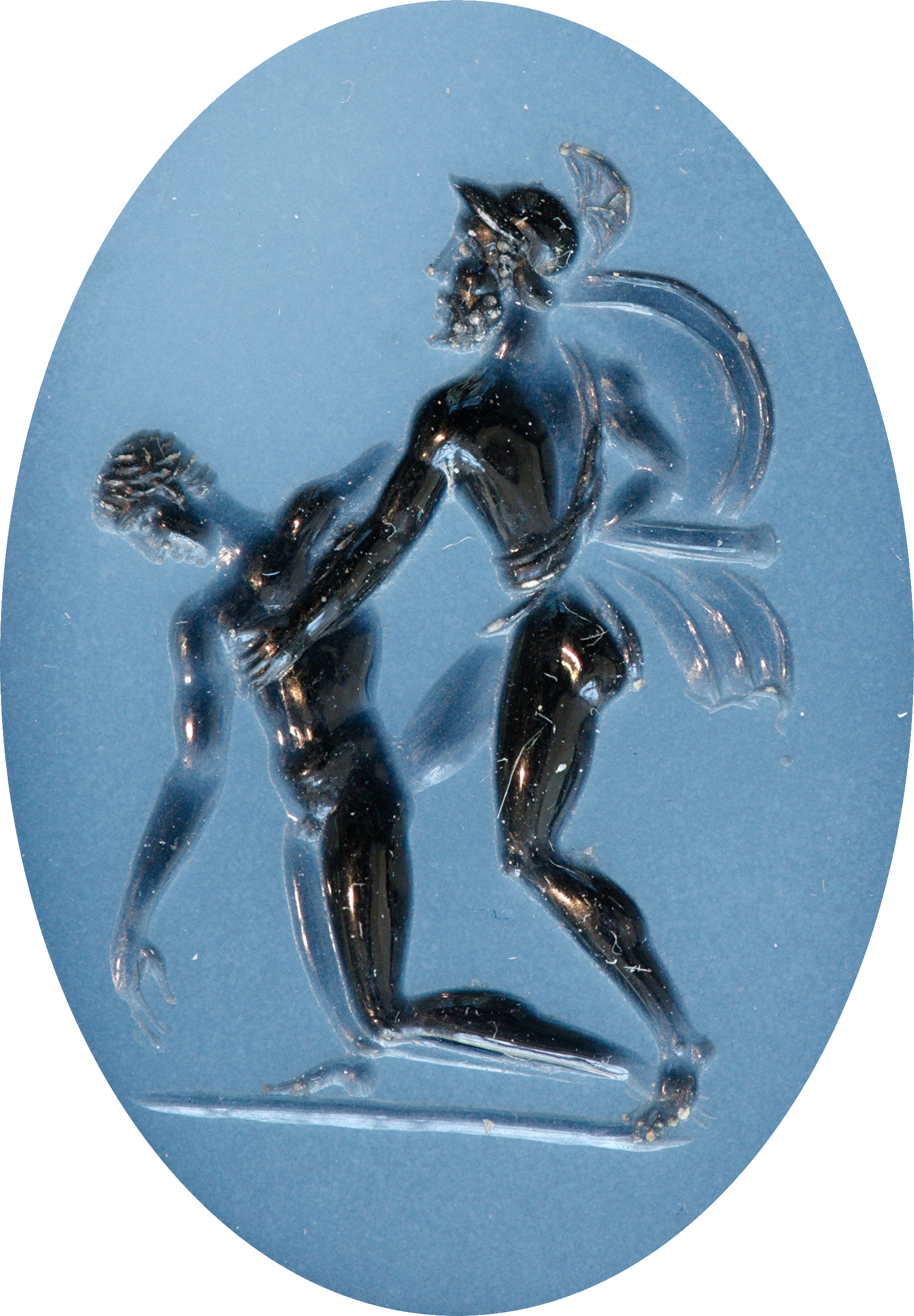
Before the young warrior, a body lies prone. It still trembles. A few more death rattles, and it will cease to be an enemy. It will cease to be anyone.
His first victory.
Panting, and with a broken voice, he recites the prayer he memorized long ago, the one he had fantasized about so many times. It is a sign of respect; he accompanies his adversary in his final trance. His eyes, emptying, still tense. What could be passing through that gaze?
Then he feels himself and discovers, terrified, what he had not noticed until that moment. A line of blood drawn from his navel to his side. It is fine. Clean. Superficial. He will survive.
But, above all, it is similar to the final gash that lacerates the corpse. An imperfect symmetry mirrors his life against the other’s death.
A lash of revelation. An undeniable sense of awareness. That scar will keep the memory alive until his last day. But today, it is you. He resolves.
It is not long before he deals a second death. This time, it is easier for him; the enemy is practically an old man. He hasn’t suffered a single scratch, but he decides to honor his rival. To bear a new, twin scar. This time, near his chest. His hand-knife superficially traces the same path as his sword, while he mutters the prayer. May your soul find the peace I gave your body.
Soon it becomes clear how gifted he is in the arts of combat. He masters the technique, applies his defenses, studies his rival, intuits, improvises, and has luck. But he never loses respect and, with every death, he accompanies, prays, and marks his own body, which becomes populated with scarifications as a tally and a record.
Until he visits The City.
In the Temple, the central column displays a geometric pattern. A series of concentric curves that the monks interpret based on the celestial bodies to narrate the past and glimpse futures.
His skin, in that moment, seems to him a mere, incomplete version of that Dance of the Gods that is being marked upon him. Perhaps guiding him.
With bated breath, the now not-so-young warrior compares his skin to the carving. He memorizes the strokes. He imagines future duels and visualizes the deaths he has not yet dealt.
It is all already written.
With that confidence, he returns to combat, and, as if his sword were guided by the inevitable, each death completes the diagram. A sequence of intersecting circles in the process of closing.
The warrior, now mature, chooses his conflicts more carefully. As long as lines remain to be closed, he knows he is invincible. But what will happen the day he completes the work on his body?
When only three marks remain, he retires.
But his prestige follows him, and what begins as a tavern provocation ends with a prayer and a new scar.
It does him little good to isolate himself as a hermit in a remote place. For he can no longer stop being the function he has so often performed. A sad cutpurse mortally receives what will become the reflection of his second-to-last mark.
The question, he tells himself, is no longer what will happen, but how he wants it to happen.
This time, he seeks purpose in the inevitable. To divine the design and, hopefully, choose correctly.
But who is worthy?
There is no enemy of equal stature when one takes no side.
He travels the roads and the dust. He asks locals and supposed sages. But he finds no answers. There are no affronts. No rival. No options.
His legs, now relics, carry him through remote mountains. In a grotto, a pond of calm water is polished obsidian. Naked on the shore, he contemplates his body. With his fingertips, he traces the turns of each scar in reverse. Each one brings back a memory. The thief and the drunkard, skilled swordsmen. Inexperienced fools. Warlords. Mercenaries. His father. His brother.
Then he understands. His mother’s tearing. He will never be able to emulate it.
The last stroke of the circle, in reality, was always the first.
 El lento ahora